Category: Main Blog Page 1 of 6

Merry Christmas and a Blessed 2026

My thoughts on family and Burma

Life has a way of making one realize that family is important. The traditions we learn while growing up in Burma help solidify the feelings, whether good or bad, that we have towards our relatives and other connections.

In our family, we love to talk and celebrate holidays. Sundays were fun at my parents’ home. Family members dropped in, and we all talked and laughed. We shared war stories, and then everyone went their separate ways, scattered around the world, and those Sundays no longer happened. We have memories, but face-to-face interactions have become rare.

Skype helps us stay connected, but it’s difficult to feel the togetherness we used to have in the living room and dining room. I remember Uncle B with his three fingers of rum, a sweet man who loved his drink. His Irish roots showed in his blue eyes. No one judged his drinking; acceptance was the word. In a healthy family, the arguments, love, and acceptance bring understanding of who we are. Christmas, birthdays, New Year’s, and any holiday were taken for granted in our extended family celebrations, but now we rely on Facebook to connect during holidays. But who will pass down the stories from our childhood and the family’s history to the next generation? It’s hard to do this on Facebook. My cousin asked me, “Are you my cousin?” I said yes, but did we really connect? We have some connection, but there’s still a disconnect. I don’t really know who she is beyond her Facebook identity. I could tell her so much about her great grandmother, the matriarch of the family, but there’s no space for this to happen in face-to-face conversations.

The world isn’t small enough to handle the wars, unrest, and lack of job security that often forces families to move in different directions. Sometimes, we don’t meet for years, or even ever again. Yes, we create new circles of connection with other wonderful people, but the history and stories we used to share have been lost. YouTube doesn’t capture this either. Am I suggesting we return to the home and the Sunday dinners where we would sit and talk? Or the meals where religious holidays brought our families together to socialize? Maybe, but would it work today, or would our phones keep buzzing with messages as we ate together?

Rituals made a difference in how we connected; we visited each other on holidays and weekends. Now, we shop until we drop on those long weekends and catch up on all the things we need to do. Do I really want to celebrate Easter? I have no time, and then there’s the cleanup. I just need to relax, please. Connecting can come later, much later. Let me forget about these holidays as they just mean more work.

Our mothers are no longer around, the ones who kept our holidays and our history alive. Where do we fit in this busy “I” world? Family is indeed our reference group.

The News Media today

It is impossible to watch the news both from the USA and Canada. There is so much more spin and a lack of fact checking. They ask us to stay informed and read ‘their’ latest news. But what junk. Maybe this is true

‘Wall Street Journal’ sued by star reporter for discrimination

The Wall Street Journal has conducted multiple rounds of layoffs this year. In a lawsuit, former reporter Stephanie Armour says the paper tried to shed employees with significant health-care costs by citing “trumped up performance issues.”

It is hard to find news and when companies are sued by their reporter it tells you about the people or companies who own current news outlets. Perhaps we need our community newspapers to flourish like the one below.

The World-Spectator is not your average small town newspaper. And it never has been.

The paper’s original publisher covered the Northwest Resistance from its front lines in 1885, even though it was happening out of the paper’s coverage area.

Weedmark himself has travelled to Afghanistan, the Philippines and Vietnam for the paper in recent years.

He views his paper as a community service first, rather than solely as a business.

Anglo-Burmese famous people

https://www.famousfix.com/list/anglo-burmese-people check this link

  • Annabella Lwin Lead singer of Bow Wow Wow 0    0rank #4 · Annabella Lwin (born Myant Myant Aye, Burmese: မြတ်မြတ်အေး, 31 October 1966) is an English-Burmese singer, songwriter and record producer best known as the lead singer of Bow Wow Wow.
  • Zienia Merton British, Actress 0    0rank #5 · 42 Zienia Merton (11 December 1945 – 14 September 2018) was a British actress born in Burma, now Myanmar. She was known for playing Sandra Benes in Space: 1999.

IS THERE EQUITY IN MULTICULTURALISM? RACISM IN THE WORK ENVIRONMENT

The study of occupations and professions has a lengthy and prominent tradition in sociology. Occupations vary greatly in the degree to which they become the master determinants of the social identity, self-conception, and social status of the people in them and in society (Visano, 1987). Occupation culture also guides and interprets the tasks and social relations of work and how they are perceived in society.

This research began in 1994 and was designed to have input from staff nurses working in hospitals within Metro Toronto who provided me with narrative experiences relating to their work life. Nursing scholarly publications in Canada were limited in the area of the production of non-supportive behaviours in nurses’ work lives, and racist discourses in particular.

My research from 1994-1999 looked at the structure of Nursing that produced a culture that had non-supportive behaviours. As nursing is about caring, I have not only reviewed positive aspects of nursing culture but also the abuse, harassment, and racism that nurses experience, as well as the culture that supports these actions. What I saw paralleled behaviours that occurred in our Multicultural society that was supposed to promote equity.

“Is there Equity in Multiculturalism?”. I argue that the idea of multiculturalism in contemporary political and legal discourses is about how to respond to the challenges associated with ethnic, cultural, and religious diversity. But in the context of Western liberal democratic societies, the term has come to encompass a variety of prescriptive claims, including the recognition that ethnic, religious, or cultural differences will be acknowledged and respected. The Vertical Mosaic: An Analysis of Social Class and Power in Canada by John Porter (1965,) Its elites have been drawn largely from middle and upper-class “British charter groups.”

Understanding social action rather than a law on multiculturalism provides an awareness of how actors in Canada have and will evaluate and charge, create, and defeat various inequitable social relationships (Jacobs, 2000. p. 26). Social justice and equity in Canada I state cannot be met within our Multicultural Act but only through advocacy with like-minded individuals from all groups working together.

Anglo-Burmese – my roots

This work is neither a work of creative non-fiction like Alex Haley’s Roots (1976) nor a biography, though my use of autoethnography may lead some readers to think it is biographical. History helps us understand what occurred in Burma prior to the diasporic departure of the Anglo-Burmese community.

There is a historical context to the vivacious culture of the Anglo-Burmese, who liked to express themselves and bonded together to form a community in Burma. A community whose roots started in Burma and whose allegiance was to their European British heritage, but whose forefathers did not really view this community as being part of the British family.

Perceptions are filtered through cultural locations. Culture shields and legitimizes inequalities. Rules that exist to guide activities can also be used to block and control activities. It is within the multiple contexts of histories pertinent to institutions, places, and individuals that I try to connect socio-cultural theories, history, and politics in order to help achieve an interdisciplinary understanding of Anglo-Burmese culture. The use of “everyday” lived experiences is a more obvious form of research that entails using autoethnography in order to facilitate a point of intersection where research methods commingle with theories framing Anglo-Burmese culture.

How do we identify ourselves? “Where do you come from?” is a question that is asked when people meet you in the West. When I say “I am Anglo-Burmese,” I am often told by people that I neither look Anglo nor Burmese and that I could be categorized as an Indian from the West Indies because of my skin colour and features. In response to such labelling, I explain to people what being Anglo-Burmese actually means. In instances when I want to avoid the hassle and burden of explaining my racial-cultural-ethnic heritage to people, I simply say that I am Canadian, though this then generally leads to the question of, “Yes, but where did your parents come from?”

This is the beginning content from a book I will be publishing this year –

Anglo-Burmese Culture: Letters from my mother.

Witting this was an empowering psycho-emotional journey for me, which benefitted from my interactions with family, friends, and diasporic Anglo-Burmese. I am going to Australia and will once again do some research with the community to see if any understanding of the culture remains or as I predict it will die out in the diaspora. I for one, use very little of what I learned as a child in Burma as living in Canada for most of my life has made my life and values more Canadian than Anglo-Burmese. My brother’s children and their children in Australia – they know the term but their lived experience in Australia. I hope when the book comes out that they will have some understanding of their heritage that goes beyond the food they like to eat.

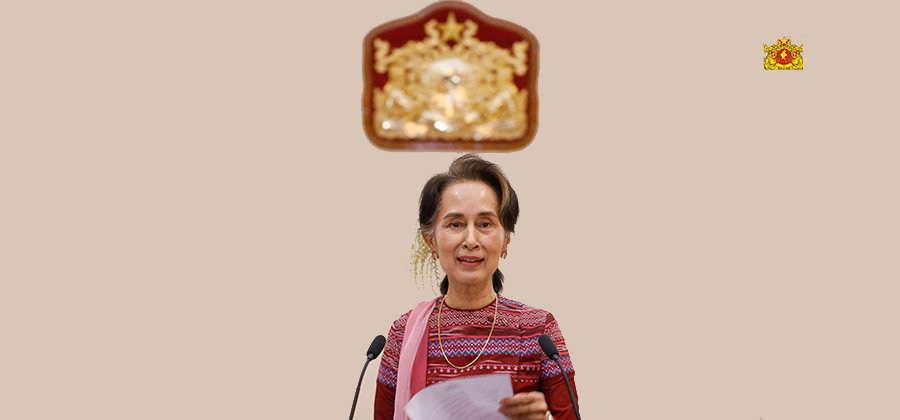
Aung San Suu Kyi- there is no case. It is a called ‘kangaroo court’

Aung San Suu Kyi testified in her defence for the first time, but the Myanmar junta wouldn’t let us hear what she said. Even her lawyers are barred from telling us. That doesn’t sound like the junta is very confident in its case against her. https://irrawaddy.com/news/burma/suu-kyi-testifies-against-myanmar-juntas-incitement-charges.html

Image

Hello Everyone – it is good to be black again.

I have not been able to get something to say as COVID took a lot of us out of everyday life to live like hermits. It was far more than social distancing. It was isolation.

Well, I am really back and will be posting my lived experiences and my worldview.

Currently, I have been reading how for three centuries and more with the tide of British expansion, English law became embedded into new lands in every quarter of the globe. It remains a basic element of the jurisprudence of independent countries like Canada, the USA, India, Australia, Hong Kong and Malaya, Ghana and Nigeria to name a few. Not only did they bring their laws but with it came the mixing of races. In India, they had the Anglo Indians while in Burma, people like my family were called Anglo Burmese. Looking at my mother’s picture, you become aware that the British did intermarry. Life was understood via British values and laws.

Doreen Andrews Jacobs

Merry Christmas and a Happy 2016

As the year ends, the pain and suffering for millions in our world goes unnoticed. Some get media coverage but most do not. Poverty exist in Canada while our new PM pushes his one big project bringing to Canada 25,000 Syrian refugees. There is no outcry of how the entire mess started with Bush and Blair who still enjoy a great life. Obama with his friends disrupted Syria. Africa is a mess in many places with refugees.

Human Rights and Social Justice the buzz words of Canada must be actions not only for 25,000 but for all in Canada who are hungry and homeless.

May 2016 be better fo

January 30 – the month is almost gone – I am questioning how to adjust my future.

What future are we looking for? How do you describe this future?

For most of the time-  our values, our spirituality makes a difference to how we see ourselves and others. To some – we may not have answers to what is occuring this the world and the evil that is occuring. To others- they don’t look around but turn inwards.

History does repeat itself, but have we learned from history? The negative daily information had made many look away and shrug their shoulders. Stop for a moment and think about what you can do that is in your incontrol, and not just take pictures of the disasters that are around you to post on social media – the big things may be out of your control. For this coming year I want to remember something that is not remembered but is really part of the global community.

The United Nations Universal Declaration of Human Rights, article 25 states:

“Everyone has a right to a standard of living adequate for the health and wellbeing of himself and his family, including food, clothing, housing, medical care and necessary social services, and the right to security in the event of unemployment, sickness, disability, widowhood, old age or other lack of livelihood in circumstances beyond his control.”

For me to advocare for this standard has become important when I look at the future that COVID19 has exposed.


Page 1 of 6

Powered by WordPress & Theme by Anders Norén