Category: Main Blog Page 4 of 6

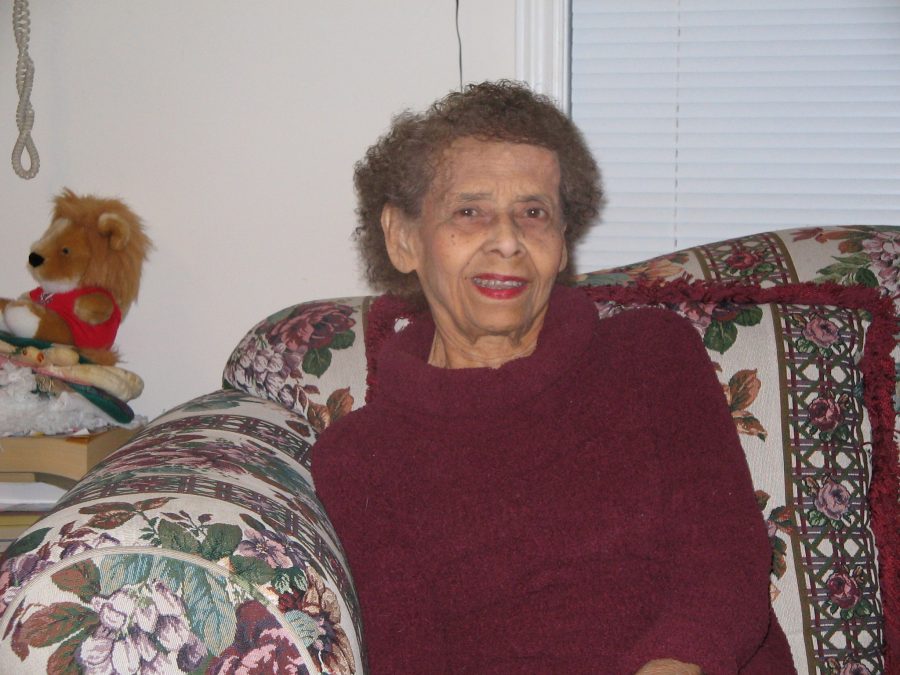
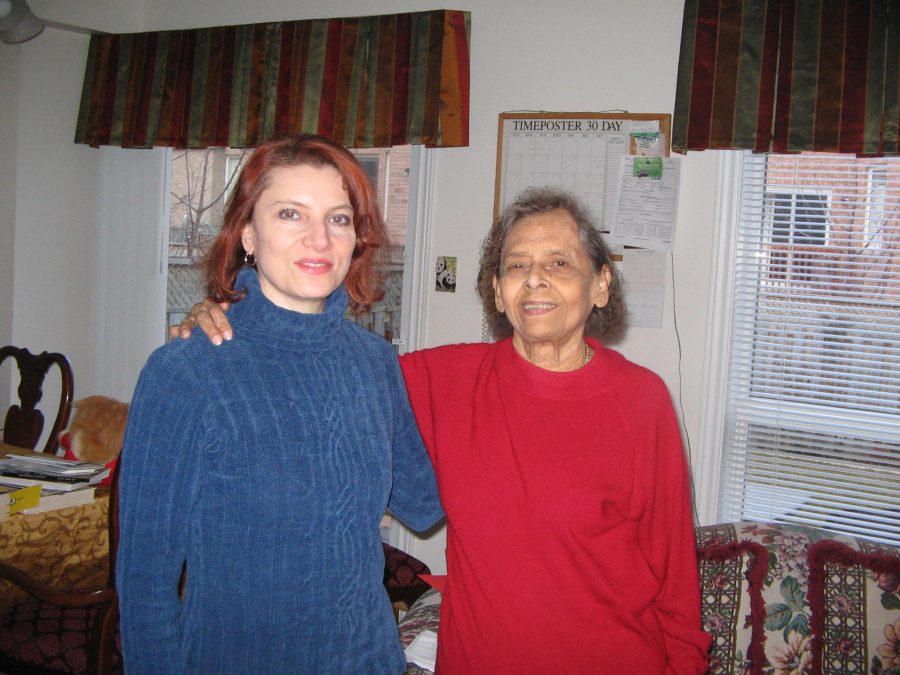
Robynne Neugebauer – Remembering a friend & sister

Robynne loved being in Toronto. She was a colleague and the type of friend that comes into your life to change it forever. She taught me that friendship was easy and not demanding and that little things could make her happy. She said we were sisters. She shared her joys and her disappointments. She listened to mine.

I should have met Robynne when she was a teenage ‘her words’ as she was in the same class as my younger brother Richard. In graduate studies at York University we passed each other but never met – another missed time. ‘Why didn’t we meet? She would question me from time to time. We passed each never meeting – until the mid nineties – we met at a wedding. Her eyes shining and with a shy smile she asked if I was Ricky Jacobs’ sister. We never looked back. Her last email message to me was that our friendship had stood the test of time.

While she lived in Toronto I found that she loved to meet for coffee, meals with friends, go to concerts, conferences, – When she sold her home in Toronto she gave a lot away to a church to help newcomers. When she moved to Ottawa, she said it would not be forever, she would return as Toronto were everyone she wanted to be with lived. She did not want to move but her job took her there.

Robynne really enjoyed her friendships and did everything to make sure they developed. When she came to my home, no matter who was there she would engage them in a conversation which made them feel welcome, chatted with them as if she knew them forever. I have been told by many of those individuals that it was the eye contact and her genuine smile that showed she was really interested in talking to them. Robynne remembered everyone’s birthday and loved to buy special cards. Once, when I told her ‘no more gifts, I have too much” she sent a gift in my name to a family in a developing country – a pair of chickens – a hen and a rooster to start an egg business. She always thought of something to give, she was indeed a giver.
Robynne made a joke of having tea with my mother and Malo who made the tea – she would say this is special tea “it is Maloti.” – which is really Malo’s real name. She called my mother ‘Auntie’ and had that special mother-daughter relationship with her. She promised her she would be there for her 85 birthday.
The last time she visited us was in mid August to wish my mother for her 84th birthday which was September 7. That day she said she would be greedy and have an extra cup of tea with a twinkle in her eyes – a joke between her and her friend Malo. She had these relationships – different with each one of us – knowing what made the relationships and trying to meet the person where they were not what they should be. For me she knew that I loved our 1:1 conversations where we would talk about world issues or girl issues. We spoke on the phone for hours when she lived in Ottawa at least twice a week. Usually more.
I can tell you all the things Robynne did for me and all what she gave me. The most important thing for me was that she gave of herself. We could argue and we could laugh our heads silly. Robynne always would spend some time at a meal with me before she would see my mother and then rush off back to Ottawa or to her father. She was always rushing to make sure she saw as many people when she came to Toronto.
She would say how guilty she felt because she did not have time to see everyone, this August visit was for her father and my mother. She wanted to spend time with them.
In the car while I was driving her to visit her father – her/our last visit, she told me she worried about him and her love for her family was very evident. She spoke about her brother Mark and his sweetness and how she wanted to visit all the family in one place. That she was going to invite each of them to lunch – thinking that they were the only one and have them all show up at the same restaurant all together so she would not have to split her time but would have all the time to visit and enjoy them.
Family was important to Robynne, Friends were important, and her animals were important to her. Her cards would include their names and paw prints. In Toronto when she was single, Robynne would visit our home daily with Mia her little doggie. Mia knew the house Robynne told me and demanded to visit us. We loved having both of them.

Robynne loved life, she did everything to make sure she lived her values. Even on down days she told me she played music and her spiritual beliefs sustained her. When anyone was in trouble – in any way, she would send out emails asking people to pray for them and follow them up with more emails. She never gave up.
Robynne had courage to go on no matter what was thrown her way. She never gave in but tired to find the way out, the sliver lining and the good things that were out there. She made her own happiness.

On Wednesday September 5th 2007 she called me and told me that she had spent time in the hospital with gastro and was now home feeling better. She gave me a detailed description but said she was OK I as usual told her she needed to make sure she had fluids – the nursy thing I was concerned she would get dehydrated, and to make sure she got some good celery, into the chicken soup. She was concerned not with being ill but with getting the course outline to her students. We talked for over 20 mins about everything and silly things had a few laughs – when I told her to rest and that I would call her again the next day. The next day there was no answer so I left a message for her saying the chicken soup must have worked and to call me when she got in. I did not know that my friend had died of a heart attack. She never returned to her beloved Toronto.

Her friends still speak of her with a hint of sadness but with joy.
Robynne had sent me these few lines in the summer of 2007–

Angels have walked beside me,
all my life–and they still do.
This is to all of you who
mean something to me,
I wish you much happiness.
The Candle Of Love, Hope & Friendship

Finally, for me Robynne, when I think of her – her face comes before me with a smile and that sparkle in her eye and it warms my heart. As long as I live Robynne’s love and warmth continues to live within my mind and heart and I will speak of her kindness over and over again. Rest in Peace – dear Robynne [Dec 18, 1959- September 8, 2007]

The day in the life of a Twitter addict

The reason for not blogging has been the time I spend reading different information posted on Twitter. This has become time consuming & insane. My books are left to one side and my writing undone. What has become of a balanced work day? I say to myself I need a break and that this is my summer holiday. Relax, I say. The comparing of political regimes, the issues of fundamentalism, the lop sided arguments – all found me getting deeper into a sphere where one is not only sharing ideas but that these ideas are with others who could be miles away. The intimacy and the anonymity together makes for a surreal world where people exchange 140 words. You learn to be brief and use limited space to make not only the argument but the tone. Oh, the feelings – to get one’s point across.
My husband looks at the BlackBerry in my hand and asks me what I am doing – I reply in a very innocent voice that I am reading the news. I never say I am on Twitter. I wonder why I have become ashamed of this behaviour and a liar to boot – must I admit that I am an addict? Hell no, I am looking for information about the world in which we life. Our cat Daisy just looks at me and in her way knows that I am full of BS. It is an addiction.

This Monday starts the work I must engage in while on Sabbatical. I have 2 books I wish to complete. Just thinking of leaving the hours I have spent on Twitter divorcing Facebook makes me ashamed that I did not practice what I preached – balance. Should I blame the 140 words and Twitter? or should I take responsibility for my lack of discipline in shutting off Twitter after the allotted 1 hour. I will let the reader decide.

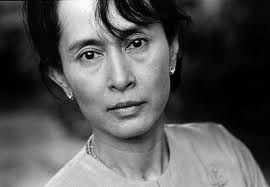
Daw Aung San Suu Kyi & International Western mass media: Amazing Grace – no Sir! just Eurocetric

When I read Western mass media’s accounting on Myanmar, some articles are factual, showing evidence while others distort using old facts support by some externally funded group. My analysis on different media outlets, comparing one with the other to find out that many repeat one journalist’s view which then becomes fact. This lack of fact check occurs, half-truths become truths and self-appointed human rights gurus make statements which then becomes the sound bite of the year. Over and over again I have found Western media outlets to perpetrate this heard like approach to their truth in Myanmar.

On Twitter I get enraged and engaged with mostly White individuals who ‘fought’ for the release of Daw Aung San Su Kyi and democracy in Burma. I applaud them for their activities for the oppressed but do the peoples of Burma now owe them their allegiance? These individuals now want the Lady and others to speak out against the Buddhist in Rakhine and give status to the Muslims who live there. After all they used their time and energy fighting for human rights in Myanmar. Like South Africa, Myanmar must be allowed to build their path to freedom. Not perfect, both countries are going in the right direction. Today the same voices shout abuse at their ‘democracy baby’ as it takes small steps and they command it instead to run and jump.

As well, to define democracy is not only difficult but it is a system that really does not exist in any part of the world. One can say that pseudo democracy exist in the North where rights of minorities are still trampled on and indigenous rights ignored until they are upheld in courts.
With this new openness in Myanmar came the hordes of NGOs and Human Rights groups who post facts laced with bias on Twitter. If one does content analysis on the 140 words before the link, it would show how over and over again words such as: “sinister threats” against reporters, stop backsliding on media freedom, genocide, extremist anti-Muslim monks, Hegemony, axis of ANTI- Buddhist extremism, control by 969 mob, inciting deadly religious violence, and In Myanmar, Democracy’s Euphoria Losing Its Glow. These words are meant to produce for the overseas reader a culture where intolerance towards the press, extreme values towards minorities, Muslims, and Christians – anyone who in not Buddhist. As always, Human Rights Watch or the other groups monitoring Myanmar do not take the messages of trauma of minority groups, citizens in the North who claim genocide like our indigenous groups, or the religious violence towards women’s health in the US. After all, these nations in the North have democracy and courts. Our great justice systems will take care of human rights and social justice but we cannot leave this to Myanmar or any countries form the South.

Living in Canada, close to the US, it annoys me to read these self-appointed experts pontificate about how this country, Myanmar, should have open democracy, and how they should live. At the same time many of these experts produce Burmese images to give their readers in the North with primitive ideas of how people look with gold teeth or without teeth in their open smile. This always reminds me of how when the USIS (the US library in Rangoon) brought ‘An American Indian’ who danced and drummed for children who went there. Now, I understand that this was the stereotype of the Indian aimed at young children – the same visuals now displayed when depicting Myanmar. The visuals exist but show bias because these tweets are never balanced by showing the whole.
I became aware of how foreign visitors behaved as a little girl living in Burma. I saw tourist taking pictures of a nice hut opposite coiffured lawns, large luxury homes in brick with servant quarters. You should know that my cousin lived very close to Durbin Beach and I stayed there often. They never took pictures of the beautiful homes or hotels. Like every country in the North and South there are pockets of wealth and pockets of poverty. When NGOs and the Western media play to their bias when reporting the South, their Eurocentric interpretations presents countries such as Myanmar in a subordinate position. Their Eurocentric based analysis, I interpreted as disrespectful. Colonial Europeans always saw themselves as superior not just in behaviour but in knowledge. The great white North’s agenda can now be seen in the social media accounting of Myanmar by many in the West.

Separating Fact from Fiction about Myanmar’s Rohingya. Merle Jacobs Response /Part 3

My last Response to clarify why I have some difficult in the recycling of certain ‘facts’

Another topic of controversy is the percentage of the Muslims in the total population during the 19th century before the accurate census of the late colonial period. Sources do not harmonize, but it seems reasonable to assume a percentage not above 10 to 15 percent around 1830. To assume a higher percentage such as 30 percent (as Rohingya writers today like to assume, basing themselves on a little reliable source) creates an issue with the interpretation of a much lower percentage around 1870 just before the huge labor migrations from Chittagong.
Some researchers link the Rohingya to an ethnic group within Myanmar & try to persuade the world that they are true natives of Arakan. The Rohingya themselves try to make it a Muslim kingdom. They say the documents were burned by the Burmese Kings. I have read Phayre (1844) that supports the idea that there was a Kingdom, a non Muslim kingdom – and that historical documents exist.
Phayre, A. P. “On the History of Arakan.” Journal of the Asiatic Society of Bengal 13, no. 1 (1844):23-53. states:
“A compilation was made at my request from various ancient chronicles, by Nga-mi, one of the most learned among the literati of his country, and I proceed to furnish an epitome of its contents. Many copies of the Ra dza-weng, (History of Kings,) are to be found among the Arakanese, differing from each other in details, being ample or scanty in the narrative, according to the research or imagination of the authors, but, all agreeing in the main facts of the national history. On the Burmese conquest of the country, the ancient chronicles were sought after with avidity, and destroyed or carried away, in the hope apparently of eradicating the national feeling. These efforts were, however, futile, many of the ancient books were secretly preserved, or carried away by the owners on their emigration to the adjoining British territory, where many chiefs anxiously watched for an opportunity to recover their country.” The article is a good read via google.

Another book that I read/obtained is Races in Burma 1933 2nd Ed by Major C.M. Enriquez he describes all the different ethnic groups, classified 135 languages & states Burma belongs to the Indo-Chinese Peninsular. As well, “the aborigines disappeared unless the Andamanese are a survival” and that “Burma is ethnically distinct from India.”
In many book and articles, the Muslims in Arakan Kingdom were called by the westerners as “The Mohammedans”. The Mohammedans called the country / Arakan / Rakhaing Kingdom as “Rovingaw”, “Rekan”. Could it be that the Muslim from Rakhain Kingdom could have mentioned to Buchanan that he’s a “Rooinga” or native from Rakhaing Country?
My concerns with the limited interpretation in your article, ‘Separating Fact from Fiction about Myanmar’s Rohingya’ is that 1)you did not speak to the Rakhine people who do not have a problem with the settlers of whom you describe but will not give their land to those brought in by the British. 2) your use of selected articles.

This is also a discourse about indigenous land, and settlers. There is a space for the rights of the Rakhine and to include evidence how a land grab occurred during Independence talks with Britain. This issue and the 1942 killings has creates current distrust and resentment within the Rakhine State. Leaving out documentation of how in 1948 some Muslim Rakhine/Rohingya wanted to take a part of Rakhine and make it part of Pakistan informs the Rakhine people that this is advocacy for one group without concerns about their apprehensions. The past is the present for many with ethnic histories, unlike newly formed countries such as Australia, Canada, and the United States.

When historical facts are available it is important for researchers to include all relevant facts. Then, if said researcher wants to advocate for settlement and citizenship use moral discourse as a means for intervention. International agencies like the UN have little power in reality in these debates, especially when they appear to take sides. Therefore, it is important for all of us in the area of social justice to persuade our audience with legitimate argument on how to live together within a just society.

Rakhine not included in Rohingya/ Part 2 In Francis Buchanan Rooinga

In Francis Buchanan – A Comparative Vocabulary of the Languages spoken in Burma Empire – Page 223 does not support the claims made by some researches which then becomes fact by Journalist. I am concerned that page 237 is the corner stone of this historical discourse. You do not let your reader know that ‘the proper natives call themselves Yakain.’ Buchanan goes on to state the “Bengal Hindus … have been settled in Arakan, the country is called Roffawn ….. not conceiving that it would be Arakan. Buchan goes on to say in the same page at the very bottom “The Mohommedans settled at Arakan call the country Rovingaw.”
Yes, on page 237 there is a one mention of Rooingo. Buchanan goes on to say that Hindus of Arakan wanted to persuade him that theirs was the common language of Arakan , ‘for what reason I do not know.’ There is no analysis on this claim. Francis Buchanan mentioned “Rooinga” a single time only, never appeared again in any of his writings. It should had been appeared many times if “Rooinga” is an ethnic or race name at that time.
As well, according to Jacques Leider, the word “Rohingya” (under the form “Rooinga”) appears a single time in a pre-colonial English text (BUCHANAN, Francis 1799. “A comparative vocabulary of some of the languages spoken in the Burma Empire” Asiatick Researches or Transactions of the Society instituted in Bengal for inquiring into the History and Antiquities the Arts, Sciences and Literature of Asia, volume V, p. 219-240.). You also can find it at below link (page 3 – 5):

http://www.networkmyanmar.org/images/stories/PDF13/jacques-leider.pdf

I take this analysis from Dr. Leider’s views:
“Dr. Francis Buchanan-Hamilton used the term “Rooinga” in a paper written in 1798 describing languages spoken in the “Birman Empire”. How should one interpret the fact that the term “Rooinga” appears a single time in an English language document before 1951 and never in any British colonial administrative text or census during the whole colonial period, i.e. 1826-1948?
The Muslims that Hamilton met in Amarapura in 1795 had been deported from Arakan, conquered in 1785 by the Burmese king. They referred to themselves in their own language as “Arakanese”, because the term “Rooinga”/ spelt “Roewhengya” by Ba Tha, the chief Rohingya “historian” and creator of the myth of a unified Rohingya race / now spelt: Rohingya, is derived from Rakhanga and means nothing more than Arakanese. Many fancy etymologies are circulating to explain the word, and often they tend to discard the obvious connection with Roshang or Rohang as found in Bengali sources since the 17th c.
It is is rather clear from contextual source evidence that the term heard by Hamilton was not used in the modern sense of a separate ethnic group of Muslims.
First of all, Hamilton was the best expert on Southeast Bengal and never used the term while talking about people in the region. He traveled in the Chittagong District and noted any ethnic group that he met during his travels and he specifically also mentions Muslims who had fled from Arakan after 1785 to Chittagong. Still he did not call them Rohingyas nor did they call themselves “Rooinga” because they were Muslims who integrated themselves into the local Muslim society where their forefathers had come from. Hamilton also wrote three detailed articles on the Bengal-Arakan frontier after his retirement and never mentions any distinctive ethnic group called such.
Second, no British administrative document during the colonial period mentions a separate ethnic group that referred to itself or was referred to by others as Rohingyas. This is not because the British census makers were still confused about the profile of Muslims in Arakan after 50 or 60 years of domination. They made indeed, as one sees in the 1931 census for example, a clear difference between recent migrants (called Chittagonians, to specify their origins in Bengal) and the old stock of the Muslim community referred to as Arakan Muhammedans. The old community formed then a sixth of the total of 300,000 in Akyab district.
Third, no early 19th century Western source on Arakan that mentions the Muslims, ever uses the term “Rohingya”. Muslims are each time described as being assimilated to the local Buddhist population in their living style, with the sole exception of their religion.”

The use of Francis Buchanan, on Rooinga -to Rohingya by Gregory B. Poling/ Part 1

Dear Gregory B. Poling:

Your Published Analysis: Separating Fact from Fiction about Myanmar’s Rohingya.
By Gregory B. Poling. Feb 13, 2014
In it you State:
“The British colonial government encouraged immigration to Myanmar from modern-day India and Bangladesh. This is a source of continued resentment within Myanmar, which is why 1823 was used as a cut-off for citizenship. The dominant narrative within the country is that the term “Rohingya” is a recent invention, and those who claim to belong to the group are actually the descendants of these colonial-era immigrants from Bangladesh.
But this narrative is demonstrably false. In 1799, Francis Buchanan, a surgeon with the British East India Company, traveled to Myanmar and met members of a Muslim ethnic group “who have long settled in Arakan [Rakhine], and who call themselves Rooinga, or natives of Arakan.” That would indicate there were self-identified Rohingya living in Rakhine at least 25 years before the 1823 cut-off for citizenship.
Even if the name “Rohingya” is too taboo to be accepted inside Myanmar, the historical record is clear that the ethnic group itself has existed in Arakan, or Rakhine State, for centuries. A significant Muslim population lived in the independent Kingdom of Mrauk-U that ruled modern-day Rakhine State from the mid-fifteenth to late eighteenth centuries. Many of the Buddhist kings of Mrauk-U even took Muslim honorifics. The evidence suggests that this community is the origin of today’s Rohingya. The group likely assimilated later waves of immigrants from Bangladesh during and after British rule, but it did not begin with them.”

My Response to clarify why I have some difficult in the recycling of certain ‘facts’:
You cite both Dr. Zarni and Rogers, are they the only know scholars of the Rakhine file and why did you leave an expert on Rakhine like Professor Leider out? Yyou do not mention of his work. You also do not mention Dr. Aung Thwin on why the takeover of the government of Burma occured. This presents a bias in presenting the facts. U Nu was a weak and terrible Prime Minster of Burma. Ask me or my family regarding all his antics. He nearly destroyed the country with his deals.
In your scholarly article you state, “The Rohingya and many of their international defenders are concerned that the census will mark the first step in a campaign to cement their status as non-citizens.” As a Fellow, it is mandatory to explore this topic with both parties having the same rights within this research area? There is the plight of the ‘Rohingya’ which we now know will not be a name used in Myanmar’s census. The plight is very real, we need to get them accepted and have them live together. To do this, the international defenders will have to make sure that those who brought papers or crossed illegally into Rakhine maynot be part of this ‘Rohingya’ group. This would be unfair to the Rakhine people. It would also be helpful if the international defenders would ask this group to learn either Burmese or Arakanese language. There are members who speak Burmese and I have met them in Canada. However, there are those who claim to be Rohingya and have no language skills of the country they claim to have lived in for centuries. International defenders must be fair and sort this out before they try to shove their truth down the throats of the Rakhine people or belittle them in the media.

Mother’s Day 2014 – Almost the end of the day &…….

Thinking all day of what to say about this day was not difficult. I wrote on my Facebook and twitter accounts wishing Mothers’ a Blessed day.

It is hard to think about Mother’s day when 6 years have gone by after the  death of my mother. She always told us children to do for her when she was alive and not when she was dead. Following that rule, there was nothing to do or say. I had said my thank you, my I love you and of course our good old fights. Two strong headed women who loved control. She  also said what she needed to say to me before she died. A strong mind in spite of her stroke she made sure I knew that she loved me but not in a messy way. Firm and fast.

In a way today was kind of empty – she was not there to buy the roses I always gave her – and I thought of the children who have difficult relationships with their mothers. Like Christmas and other ‘family’ holidays these days leave a little pit or hole in one’s heart. That empty feeling or the odd person out while everyone is dancing to the music that the whole world knows. With social media our world is a lot closer yet strangely not more loving. It is the love of parents, biological or not, that makes the difference for a child. Growing up in this knowledge makes days like this have meaning. When there is a void of this meaning such days take on a different picture. One where most people take the inside space, while the others stand on the outside looking in. And the wars, the bombs that leave families broken. What do we say to those children? Countries play war games but people die. The empty seat on a day like today is not taken into account when mad men go to war in the name of democracy or any strange feel good sound bite.

Well Mother, the day is over. Thank you for teaching me to do for the living. That paid off well as really there is nothing to say or do for you. And you would know, I speak of you often just like you did when Dad died. You taught us well: to live in the present, give to others and to treat everyone equally.

Thank you to all mothers who took time with your children teaching them some life lessons

Back to Blog – 2014: How student engagement stopped my blog engagement :-)

Teaching Research Methods at York U was not just fulfilling but it got me thinking of my research. Informing students that they needed to keep an open mind while wanting to research areas where they “knew” the outcome was difficult. The light bulb and the ‘ah ha’ moments thrilled me. It thrilled me watch how topics on Aboriginal justice, Human Rights, Multiculturalism, Sexuality and Gender Rights,all based on survey research, secondary research which made students acknowledge that there were many views relating to their ‘truth.’

Time management was an issue for me which left me away from this site. I missed the time I spent with my ‘brain’ and researching ‘my truth’. Reading 60+ drafts, and final papers takes time. But that was one course – the other had over 20 papers which was a major paper. Of course l must remember the other two classes. Overload is never good and it made me speak to several students about their lives. One mother with a year old child came to 8.30 AM classes, the other was had a part-time job which he loved plus instead of taking 5 courses was taking 6 major courses. On top of the course load, this young man was actively involved with civic activities at the university. Then the 20% who I no longer base my evaluation of student participation avoided most classes, assignments but could show up for exams – just hoping the 40% would let them slide through – what I do not know.  I sure would love to communicate with them as to why register for a course and waste over $1000.

As I want to engage with all my students I attended ‘Rethinking Retention’ where I heard Vincent Tinto the Distinguished University Professor Emeritus at Syracuse U. We discussed Purpose and how to develop this, about Engagement, Connectedness and Academic Culture. Cam we help students answer this question: “what is a university?”

I will be teaching the same courses but I hope this new learning will help the 20% who may not have the same interest as the 70%. Well the 10% who are high achievers will always visit me in my office without the usual ‘please come with your draft to see me in my office.’

Welcome back Merle

Canadian Multiculturalism

Multiculturalism has some positive aspects but it is more about demographic diversity, a recognized hyphenated Canadianism, as well as funding for some formal and informal ethnic minority organisations in civil society.
Minority ethnic identity is not truly respected as part of the larger Canadian identity when there are Anglophones and Francophones and others are labeled as Allophones.

Some in Canada like to identify multiculturalism and Aboriginal issues overlapping around concerns of racism and discrimination. To this discussion I assert that our First Nations peoples and their concerns that must not be linked with ethnic minorities as their official rights and the government’s obligations predate this Act with Aboriginal self-government rights. Canada officially is a bilingual and a multicultural country with Aboriginal peoples left out of this debate.

Multiculturalism is not only about visible minority groups, it includes all immigrant groups such as Italians, Greeks, and Portuguese. If Multiculturalism in Canada had initially been demanded by non-European rather than the Ukrainians in the West and Italians who were a large ethnic group in the GTA, European groups who were perceived by the dominant founding groups as having strong religious ties and liberal practice that fit into their Canadian mosaic, rather than groups like the Tamils from Sri Lanka, Muslims from Pakistan, immigrants from China, India, Somalia or the Middle East with cultural commitments to illiberal practices, and if their demand for multiculturalism was perceived as a demand  for such illiberal practices to be tolerated and accommodated, then I am quite sure that this Act would have been written differently or stayed Bicultural.

Today we have a Multicultural Act – Is it working: I say NO!

Rakhine people: How do they get voice in today’s world?

During the past fifteen years I became involved once again with  Canadians from Burma now know as Myanmar. Having only been involved with Canada and Canadian issues, I was unaware of the different issues that now was part of the ex-pats. I knew they wanted democracy and Daw Aung San Su Kyi needed to be released from house arrest. That was all!

Today, complex ethnic interactions is for a sociologist a mine field, especially when we speak about rights. On twitter tags like or tweets that include “Rohingyans, victims of Genocide in Burma” ; one can read about how one side is creating a problem with a lack of balance or facts. Then I hear from the Rakhine ex-pats how upset they are with the lack of a honest discourse and that religion is not the issue as their is  interfaith dialogues occurring in Myanmar.
I have commented on the word THUGS and allowed a piece from a guest to speak to how they view the world in which they live.
Living in a so called Multicultural country which states it adheres to Human Rights many INGOs in Canada like to point out the ‘sins’ of developing countries. The EU, the USA as well are full of organizations making a living out of the misery of others. At first glance one does not see the missionary zeal that comes along with these individuals, and how they know better than those they try to help. Along with interfering with local issues these INGOs and their supporters back home make it their business to advise all of us how we should think about issues in a land that we came from or live in. As a researcher, it is incumbent to find out ‘the best’ truth there is.  Apart from current scholarly work, History helps to find out the who, where, what, and why.

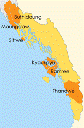
Q: Who are the original population in Rakhine? The Rohingya state they were there for centuries and the government say there are illegal Bengali nationals within an older Muslim group – Arakanese Muslims .       Checking the article below, there was a Rakhine Kingdom and it was not Muslim. Other articles state how the Mulsims did live within the Rakhine Kingdom and lived together with Buddhist. Rather than distorting facts, INGOs could benefit their advocacy without advancing inflammatory statements like Genocide, and Thugs.    Not one INGO looks at their own countries and how they treat anyone that is viewed as illegal – that includes Canada which has deported many refugee applicants even after 15 years in this country.
In order to make sure I read the article below to support the idea that there was a Kingdom and that historical documents exist.
Phayre, A. P. “On the History of Arakan.” Journal of the Asiatic Society of Bengal 13, no. 1 (1844):23-53. states:
A compilation was made at my request from various ancient chronicles, by Nga-mi, one of the most learned among the literati of his country, and I proceed to furnish an epitome of its contents. Many copies of the Ra dza-weng, (History of Kings,) are to be found among the Arakanese, differing from each other in details, being ample or scanty in the narrative, according to the research or imagination of the authors, but, all agreeing in the main facts of the national history. On the Burmese conquest of the country, the ancient chronicles were sought after with avidity, and destroyed or carried away, in the hope apparently of eradicating the national feeling. These efforts were, however, futile, many of the ancient books were secretly preserved, or carried away by the owners on their emigration to the adjoining British territory, where many chiefs anxiously watched for an opportunity to recover their country.”

The article is a good read via google.  However, in order that Religion alone is not the problem we have to understand the long standing tensions. One reason is language and identity, the other a historical fact when the Rohingyas not only formed their own army but also approached the ‘Father of Pakistan,’ Muhammad Ali Jinnah, ‘asking him to incorporate Northern Arakan into East Pakistan.
It is not  outsiders that will resolve this issue. They add to the animosities.  Goodwill on all parties within the country can reconcile the differences and bring about stability in this baby democracy.


Page 4 of 6

Powered by WordPress & Theme by Anders Norén